In-line inspection before assembly
Plan a view while the bead is visible, before the next assembly operation hides it. Resolve part location, image timing and the deadline for the agreed reject or hold response.
Explore this application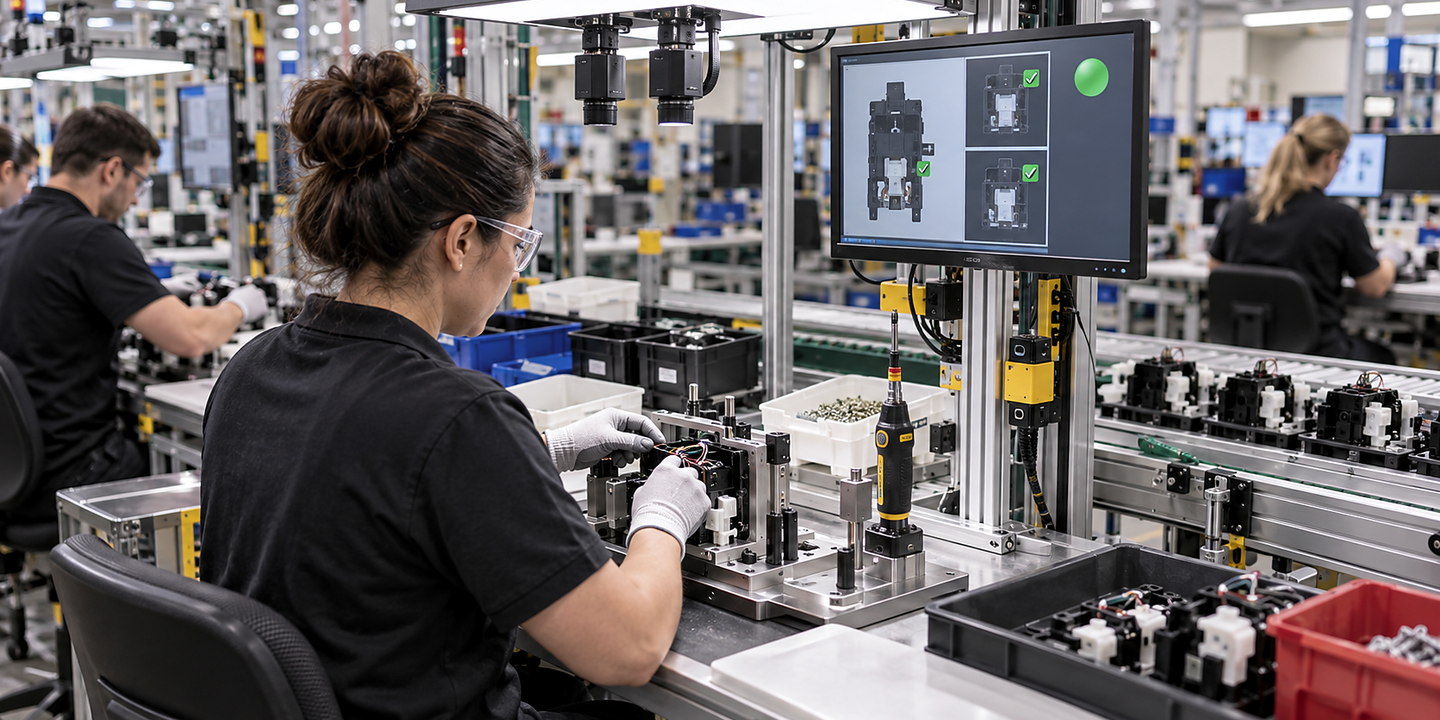
Explore practical uses for adhesive bead inspection across your products, parts and surrounding production line.
Choose an approach to adhesive bead inspection by what the product or part does in production and by the result you need—not by sector name alone.
For in-line inspection using adhesive bead path and continuity and retrofit or multi-variant checks involving adhesive bead path and continuity, different operating conditions can change the recommended approach.
Plan adhesive bead inspection around representative good, bad and marginal samples, line presentation, lighting, reject handling and challenge criteria. Discuss an optical feasibility trial with Oxford Vision Systems. Use the application examples to compare in-line inspection using adhesive bead path and continuity with retrofit or multi-variant checks involving adhesive bead path and continuity.
Discuss your application

Plan a view while the bead is visible, before the next assembly operation hides it. Resolve part location, image timing and the deadline for the agreed reject or hold response.
Explore this applicationSurvey the viewing access and interfaces on the existing line. Define samples and recipes for each intended variant, then challenge changeover and wrong-recipe responses.
Explore this applicationDescribe the real range for visible defect or measurement definition for adhesive bead path & continuity and good, bad and marginal sample range, plus presentation and upstream controls—not just a nominal drawing.
Define the required outcome for in-line inspection using adhesive bead path and continuity, the allowed window and what your team can recover without outside help.
Record the space, services, neighbouring equipment, people, cleaning and data connections around retrofit or multi-variant checks involving adhesive bead path and continuity.
Agree representative trials, difficult samples and the result record for false-accept, false-reject and challenge criteria, including who will review it.
| Approach | Often suitable when | Watch for |
|---|---|---|
| Camera-based adhesive bead inspection | Several visible decisions must be checked together: continuity, width, path position or excess adhesive on a defined part. | Prove visibility and repeatability with realistic good, bad and marginal samples; match each result to the part and handling response. |
| Purpose-built presence or position sensors | The required decision is simple and repeatable, with a suitable sensing point and stable part presentation. | Check the actual decision boundary and fault cases; a simple presence result does not establish every bead dimension or bond property. |
| Offline metrology or destructive tests | The required property is hidden or cannot be established by an in-line image, such as a separate dimensional or bond test. | Agree the test method, sample selection and records. Keep these checks alongside visual inspection when the product needs both. |